


 EN
 Türkçe Turkish
 English
 O'zbekcha Uzbek
 Русский Russian
 Türkmence Turkmen
 Қазақша Kazakh
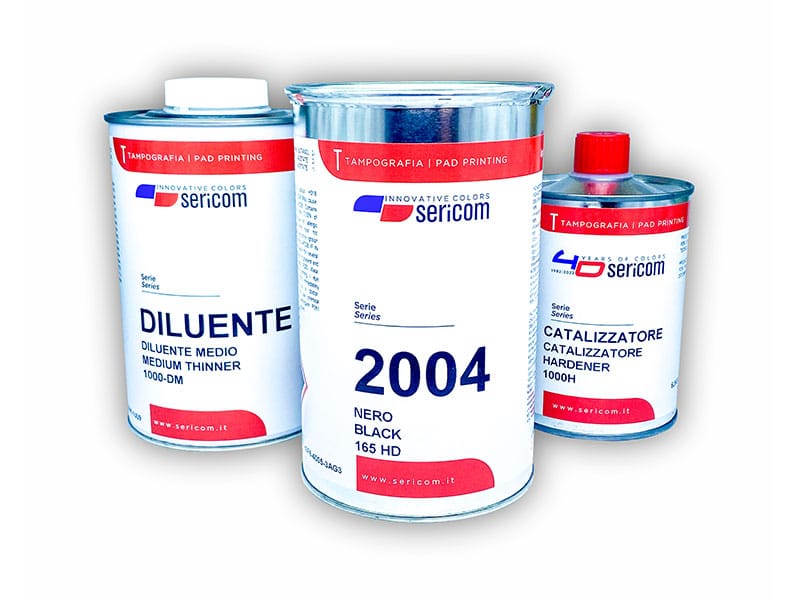

Type: solvent
Printing process: pad printing
Ink type: one and two-component
Finish: glossy
Materials:
ABS, Aluminium, Coated paper, Lacquered surfaces, Metal (in general), Mylar, Polycarbonate, Polymethacrylate (PMMA), Polystyrene, Polyurethane, rigid PVC, Self-adhesive PVC, treated Ecoallene, treated PETG, treated Polyacetal (POM) (hard-plast), treated Polyester, treated Polyethylene (HD-PE, LD-PE), treated Polypropylene, Wood
Main features:
- The 2004 series doesn’t contain Cyclohexanone and aromatic Naphthas.
- Excellent printability . Soluble during printing . Glossy appearance
- Moderate solidity for applications that must be exposed to the outside . Quick drying . Excellent opacity
- Excellent adhesion even on surfaces with poor wettability, using the relative hardener.
- Excellent chemical-physical solidity . Pseudoplastic ink
Because of the versatility of use of this ink, and the possible differences in the quality of the supports used, pre-tests are suggested.
If necessary, help the adhesion of the ink modifying the surface tension of the various supports with specific treatments such as: plasma treatment, corona, flaming (physical treatments), cleaning or degreasing (chemical treatments).
It’s possible to do tests even with post physical treatments.
- 2004 series mixed with hardener has a pot life of approx. 8h (at 20°C).
- Higher temperatures and humidity will reduce pot life
- (suggested temperature at 20-25°C and low moisture content in the workplace).
- Used as two-component ink, 2004 series has to be mixed with hardener at a specified ratio prior to processing.
- Thinner is added after addition of hardener.
- The mixed ink should be allowed to pre-react for approx. 15 minutes prior to print.